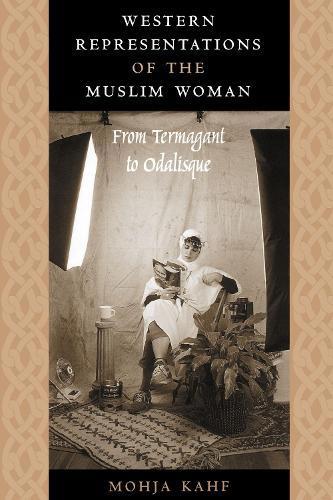
Western Representations of the Muslim Woman
Veiled, secluded, submissive, oppressed-the "odalisque" image has held sway over Western representations of Muslim women since the Enlightenment of the eighteenth century. Yet during medieval and Renaissance times, European writers portrayed Muslim women in exactly the opposite way, as forceful queens of wanton and intimidating sexuality.
In this illuminating study, Mohja Kahf traces the process through which the "termagant" became an "odalisque" in Western representations of Muslim women. Drawing examples from medieval chanson de geste and romance, Renaissance drama, Enlightenment prose, and Romantic poetry, she links the changing images of Muslim women to changes in European relations with the Islamic world, as well as to changing gender dynamics within Western societies.
Original: $23.99
-65%$23.99
$8.40Western Representations of the Muslim Woman
Veiled, secluded, submissive, oppressed-the "odalisque" image has held sway over Western representations of Muslim women since the Enlightenment of the eighteenth century. Yet during medieval and Renaissance times, European writers portrayed Muslim women in exactly the opposite way, as forceful queens of wanton and intimidating sexuality.
In this illuminating study, Mohja Kahf traces the process through which the "termagant" became an "odalisque" in Western representations of Muslim women. Drawing examples from medieval chanson de geste and romance, Renaissance drama, Enlightenment prose, and Romantic poetry, she links the changing images of Muslim women to changes in European relations with the Islamic world, as well as to changing gender dynamics within Western societies.
Product Information
Product Information
Shipping & Returns
Shipping & Returns
Description
Veiled, secluded, submissive, oppressed-the "odalisque" image has held sway over Western representations of Muslim women since the Enlightenment of the eighteenth century. Yet during medieval and Renaissance times, European writers portrayed Muslim women in exactly the opposite way, as forceful queens of wanton and intimidating sexuality.
In this illuminating study, Mohja Kahf traces the process through which the "termagant" became an "odalisque" in Western representations of Muslim women. Drawing examples from medieval chanson de geste and romance, Renaissance drama, Enlightenment prose, and Romantic poetry, she links the changing images of Muslim women to changes in European relations with the Islamic world, as well as to changing gender dynamics within Western societies.


