Status of Informal Science and Engineering Education
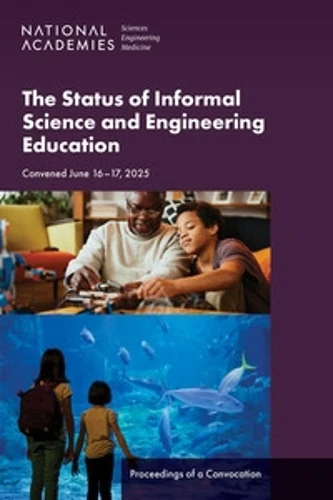
In 2025, the National Academies brought together more than 400 researchers, practitioners, policymakers, and funders to discuss the latest developments in the field of informal science and engineering education. Participants representing a wide variety of informal learning settings - including aquariums, parks, museums, out-of-school time (OST) programs, science centers, and citizen science efforts - reflected on the impacts of the 2009 National Academies' report, Learning Science in Informal Environments and how the field has evolved since then. Participants highlighted successes and challenges to providing informal science and engineering learning experiences to learners of all ages and backgrounds and identified potential next steps for research, practice, and policy to enhance the reach and effectiveness of the field.
Original: $26.50
-65%$26.50
$9.27Status of Informal Science and Engineering Education
In 2025, the National Academies brought together more than 400 researchers, practitioners, policymakers, and funders to discuss the latest developments in the field of informal science and engineering education. Participants representing a wide variety of informal learning settings - including aquariums, parks, museums, out-of-school time (OST) programs, science centers, and citizen science efforts - reflected on the impacts of the 2009 National Academies' report, Learning Science in Informal Environments and how the field has evolved since then. Participants highlighted successes and challenges to providing informal science and engineering learning experiences to learners of all ages and backgrounds and identified potential next steps for research, practice, and policy to enhance the reach and effectiveness of the field.
Product Information
Product Information
Shipping & Returns
Shipping & Returns
Description
In 2025, the National Academies brought together more than 400 researchers, practitioners, policymakers, and funders to discuss the latest developments in the field of informal science and engineering education. Participants representing a wide variety of informal learning settings - including aquariums, parks, museums, out-of-school time (OST) programs, science centers, and citizen science efforts - reflected on the impacts of the 2009 National Academies' report, Learning Science in Informal Environments and how the field has evolved since then. Participants highlighted successes and challenges to providing informal science and engineering learning experiences to learners of all ages and backgrounds and identified potential next steps for research, practice, and policy to enhance the reach and effectiveness of the field.