Soldiers Fell Like Autumn Leaves
Along the Wabash River near present-day Fort Recovery, Ohio, on November 4, 1791, the Maumee Confederation of Indigenous tribes destroyed a superior American army led by Revolutionary War veteran General Arthur St. Clair. The victory was so complete, that the Shawnee recalled that the “the ground was covered with the dead and the dying.” Also known as “St. Clair’s Defeat” and “The Battle With No Name”—since the US forces did not know where they were—the Battle of the Wabashwas the United States military’s worst disaster in the history of the Indian wars. This, despite the army having artillery and outnumbering the confederation warriors by almost two to one. It was both the new Republic’s first war and its first undeclared war. Ordered on the offensive by President George Washington in an attempt to exert control of the frontier, the defeat triggered the first Congressional investigation and the first assertion of executive privilege. Often overlooked is thatno other Native American battle in three centuries, from colonial times to Geronimo, affected somany lives. The Maumee Confederation’s victory largely stymied American expansion into the rest of the Northwest Territory, and ultimately into the Great Plains for almost four years. For the Native Peoples this was a respite from the incessant deforestation that accompanied western settlements. While Ohio and the rest of the Old Northwest ultimately succumbed to US control, President James Madison would later warn his fellow Americans that the unchecked destruction of the natural environment was as much of a threat to national security as any enemy along its borders.
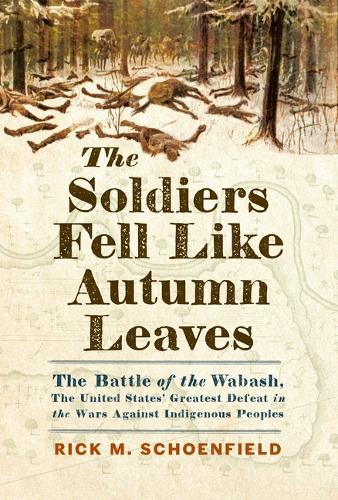
The Soldiers Fell Like Autumn Leaves: The Battle of the Wabash, the United States’ Greatest Defeat in the Wars Against Indigenous Peoples by Rick M. Schoenfield places this important war into its cultural, racial, economic, and political context. For the first time, the ecological impact is explored, for at stake in the clash between Woodland Native Americans and white, agrarian settlement, was the fate of a vast forest eco-system. The issue echoes today in the debate over climate change, deforestation, and indigenous control of forest habitats. Based on primary sources, some of which are consulted here for the first time, including a newly discovered muster roll and the recent archaeological study of the battlefield, the author provides the most accurate description of the battle while capturing the drama of what occurred. He also critically examines the information gathering,planning, and tacticsof both the Maumee Confederation and the United States, from the conception of the campaign through the battlefield decisions. By skillfully weaving together the disparate but related parts of the larger history of this battle,The Soldiers Fell Like Autumn Leaves allows the reader to better understand the motivations and long-term consequences of the war against Native peoples in the Americas.
The Soldiers Fell Like Autumn Leaves: The Battle of the Wabash, the United States’ Greatest Defeat in the Wars Against Indigenous Peoples by Rick M. Schoenfield places this important war into its cultural, racial, economic, and political context. For the first time, the ecological impact is explored, for at stake in the clash between Woodland Native Americans and white, agrarian settlement, was the fate of a vast forest eco-system. The issue echoes today in the debate over climate change, deforestation, and indigenous control of forest habitats. Based on primary sources, some of which are consulted here for the first time, including a newly discovered muster roll and the recent archaeological study of the battlefield, the author provides the most accurate description of the battle while capturing the drama of what occurred. He also critically examines the information gathering,planning, and tacticsof both the Maumee Confederation and the United States, from the conception of the campaign through the battlefield decisions. By skillfully weaving together the disparate but related parts of the larger history of this battle,The Soldiers Fell Like Autumn Leaves allows the reader to better understand the motivations and long-term consequences of the war against Native peoples in the Americas.
$9.97
Original: $28.50
-65%Soldiers Fell Like Autumn Leaves—
$28.50
$9.97Soldiers Fell Like Autumn Leaves
Along the Wabash River near present-day Fort Recovery, Ohio, on November 4, 1791, the Maumee Confederation of Indigenous tribes destroyed a superior American army led by Revolutionary War veteran General Arthur St. Clair. The victory was so complete, that the Shawnee recalled that the “the ground was covered with the dead and the dying.” Also known as “St. Clair’s Defeat” and “The Battle With No Name”—since the US forces did not know where they were—the Battle of the Wabashwas the United States military’s worst disaster in the history of the Indian wars. This, despite the army having artillery and outnumbering the confederation warriors by almost two to one. It was both the new Republic’s first war and its first undeclared war. Ordered on the offensive by President George Washington in an attempt to exert control of the frontier, the defeat triggered the first Congressional investigation and the first assertion of executive privilege. Often overlooked is thatno other Native American battle in three centuries, from colonial times to Geronimo, affected somany lives. The Maumee Confederation’s victory largely stymied American expansion into the rest of the Northwest Territory, and ultimately into the Great Plains for almost four years. For the Native Peoples this was a respite from the incessant deforestation that accompanied western settlements. While Ohio and the rest of the Old Northwest ultimately succumbed to US control, President James Madison would later warn his fellow Americans that the unchecked destruction of the natural environment was as much of a threat to national security as any enemy along its borders.
The Soldiers Fell Like Autumn Leaves: The Battle of the Wabash, the United States’ Greatest Defeat in the Wars Against Indigenous Peoples by Rick M. Schoenfield places this important war into its cultural, racial, economic, and political context. For the first time, the ecological impact is explored, for at stake in the clash between Woodland Native Americans and white, agrarian settlement, was the fate of a vast forest eco-system. The issue echoes today in the debate over climate change, deforestation, and indigenous control of forest habitats. Based on primary sources, some of which are consulted here for the first time, including a newly discovered muster roll and the recent archaeological study of the battlefield, the author provides the most accurate description of the battle while capturing the drama of what occurred. He also critically examines the information gathering,planning, and tacticsof both the Maumee Confederation and the United States, from the conception of the campaign through the battlefield decisions. By skillfully weaving together the disparate but related parts of the larger history of this battle,The Soldiers Fell Like Autumn Leaves allows the reader to better understand the motivations and long-term consequences of the war against Native peoples in the Americas.
The Soldiers Fell Like Autumn Leaves: The Battle of the Wabash, the United States’ Greatest Defeat in the Wars Against Indigenous Peoples by Rick M. Schoenfield places this important war into its cultural, racial, economic, and political context. For the first time, the ecological impact is explored, for at stake in the clash between Woodland Native Americans and white, agrarian settlement, was the fate of a vast forest eco-system. The issue echoes today in the debate over climate change, deforestation, and indigenous control of forest habitats. Based on primary sources, some of which are consulted here for the first time, including a newly discovered muster roll and the recent archaeological study of the battlefield, the author provides the most accurate description of the battle while capturing the drama of what occurred. He also critically examines the information gathering,planning, and tacticsof both the Maumee Confederation and the United States, from the conception of the campaign through the battlefield decisions. By skillfully weaving together the disparate but related parts of the larger history of this battle,The Soldiers Fell Like Autumn Leaves allows the reader to better understand the motivations and long-term consequences of the war against Native peoples in the Americas.
Product Information
Product Information
Shipping & Returns
Shipping & Returns
Description
Along the Wabash River near present-day Fort Recovery, Ohio, on November 4, 1791, the Maumee Confederation of Indigenous tribes destroyed a superior American army led by Revolutionary War veteran General Arthur St. Clair. The victory was so complete, that the Shawnee recalled that the “the ground was covered with the dead and the dying.” Also known as “St. Clair’s Defeat” and “The Battle With No Name”—since the US forces did not know where they were—the Battle of the Wabashwas the United States military’s worst disaster in the history of the Indian wars. This, despite the army having artillery and outnumbering the confederation warriors by almost two to one. It was both the new Republic’s first war and its first undeclared war. Ordered on the offensive by President George Washington in an attempt to exert control of the frontier, the defeat triggered the first Congressional investigation and the first assertion of executive privilege. Often overlooked is thatno other Native American battle in three centuries, from colonial times to Geronimo, affected somany lives. The Maumee Confederation’s victory largely stymied American expansion into the rest of the Northwest Territory, and ultimately into the Great Plains for almost four years. For the Native Peoples this was a respite from the incessant deforestation that accompanied western settlements. While Ohio and the rest of the Old Northwest ultimately succumbed to US control, President James Madison would later warn his fellow Americans that the unchecked destruction of the natural environment was as much of a threat to national security as any enemy along its borders.
The Soldiers Fell Like Autumn Leaves: The Battle of the Wabash, the United States’ Greatest Defeat in the Wars Against Indigenous Peoples by Rick M. Schoenfield places this important war into its cultural, racial, economic, and political context. For the first time, the ecological impact is explored, for at stake in the clash between Woodland Native Americans and white, agrarian settlement, was the fate of a vast forest eco-system. The issue echoes today in the debate over climate change, deforestation, and indigenous control of forest habitats. Based on primary sources, some of which are consulted here for the first time, including a newly discovered muster roll and the recent archaeological study of the battlefield, the author provides the most accurate description of the battle while capturing the drama of what occurred. He also critically examines the information gathering,planning, and tacticsof both the Maumee Confederation and the United States, from the conception of the campaign through the battlefield decisions. By skillfully weaving together the disparate but related parts of the larger history of this battle,The Soldiers Fell Like Autumn Leaves allows the reader to better understand the motivations and long-term consequences of the war against Native peoples in the Americas.
The Soldiers Fell Like Autumn Leaves: The Battle of the Wabash, the United States’ Greatest Defeat in the Wars Against Indigenous Peoples by Rick M. Schoenfield places this important war into its cultural, racial, economic, and political context. For the first time, the ecological impact is explored, for at stake in the clash between Woodland Native Americans and white, agrarian settlement, was the fate of a vast forest eco-system. The issue echoes today in the debate over climate change, deforestation, and indigenous control of forest habitats. Based on primary sources, some of which are consulted here for the first time, including a newly discovered muster roll and the recent archaeological study of the battlefield, the author provides the most accurate description of the battle while capturing the drama of what occurred. He also critically examines the information gathering,planning, and tacticsof both the Maumee Confederation and the United States, from the conception of the campaign through the battlefield decisions. By skillfully weaving together the disparate but related parts of the larger history of this battle,The Soldiers Fell Like Autumn Leaves allows the reader to better understand the motivations and long-term consequences of the war against Native peoples in the Americas.


