Selected Letters
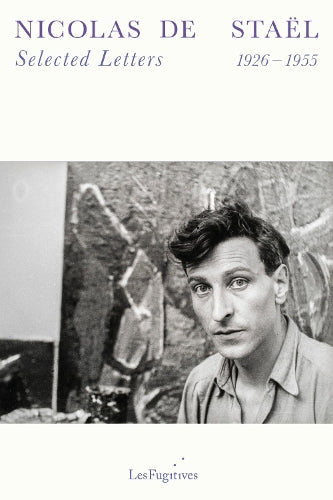
Available in English for the first time, these letters are taken from the several hundred letters anthologised by French art historian Germain Viatte, published in 2014 by Le bruit du temps. As well as an intriguing investigation of one of the great 20th-century painters, these are also the letters of a writer. From his adolescence onwards, Nicolas de Staël developed an incisive style of his own, capturing – as in his paintings – the reality of what he saw with the intensity of pure simplicity.
'Nicolas de Staël’s letters are imbued with that mixture of absolute certitude and profound doubt which is the mark of a great artist. His belief in his destiny – which arises from faith – places the bar so high that it will always be impossible to clear. … He had the premonition that the path would be long and winding before it ever broke onto a clearing. Staël is not, like Raphaël, Géricault or Seurat, a precocious genius. If he must be compared to one of his predecessors, it is impossible not to think of Van Gogh.’ – Jean Frémon
‘This selection of letters begins in 1926 when de Staël was 12 years old and ends with the last letter he wrote on the day he died. De Staël wrote thousands of letters – to his adoptive parents, his wives and lovers, his children, gallery owners and dealers, poets, fellow painters and those who bought his work. They describe the course of his life from young man eagerly awaiting a cheque from a family member at a post office in Cadiz so he can buy his daily kilo of tomatoes, his wine, his newspaper, paints, canvases and sketchbooks, to the final months, when black gulls began to gather on his canvasses, bringing a darker, inky sense of foreboding to work that until then had been characterised by a boundless sense of colour and light. The letters also show the evolution of his understanding of painting, of what painting actually is, of the human cost – what part of the self must be sacrificed to it. And always he is aware of the complementary roles of language and painting. De Staël’s work, though it bears traces of figuration, is never illustrative; the writing is his illustrative tool, and his own words provide a dazzling commentary on the paintings.’ – Helen Stevenson
Original: $19.99
-65%$19.99
$7.00Selected Letters
Available in English for the first time, these letters are taken from the several hundred letters anthologised by French art historian Germain Viatte, published in 2014 by Le bruit du temps. As well as an intriguing investigation of one of the great 20th-century painters, these are also the letters of a writer. From his adolescence onwards, Nicolas de Staël developed an incisive style of his own, capturing – as in his paintings – the reality of what he saw with the intensity of pure simplicity.
'Nicolas de Staël’s letters are imbued with that mixture of absolute certitude and profound doubt which is the mark of a great artist. His belief in his destiny – which arises from faith – places the bar so high that it will always be impossible to clear. … He had the premonition that the path would be long and winding before it ever broke onto a clearing. Staël is not, like Raphaël, Géricault or Seurat, a precocious genius. If he must be compared to one of his predecessors, it is impossible not to think of Van Gogh.’ – Jean Frémon
‘This selection of letters begins in 1926 when de Staël was 12 years old and ends with the last letter he wrote on the day he died. De Staël wrote thousands of letters – to his adoptive parents, his wives and lovers, his children, gallery owners and dealers, poets, fellow painters and those who bought his work. They describe the course of his life from young man eagerly awaiting a cheque from a family member at a post office in Cadiz so he can buy his daily kilo of tomatoes, his wine, his newspaper, paints, canvases and sketchbooks, to the final months, when black gulls began to gather on his canvasses, bringing a darker, inky sense of foreboding to work that until then had been characterised by a boundless sense of colour and light. The letters also show the evolution of his understanding of painting, of what painting actually is, of the human cost – what part of the self must be sacrificed to it. And always he is aware of the complementary roles of language and painting. De Staël’s work, though it bears traces of figuration, is never illustrative; the writing is his illustrative tool, and his own words provide a dazzling commentary on the paintings.’ – Helen Stevenson
Product Information
Product Information
Shipping & Returns
Shipping & Returns
Description
Available in English for the first time, these letters are taken from the several hundred letters anthologised by French art historian Germain Viatte, published in 2014 by Le bruit du temps. As well as an intriguing investigation of one of the great 20th-century painters, these are also the letters of a writer. From his adolescence onwards, Nicolas de Staël developed an incisive style of his own, capturing – as in his paintings – the reality of what he saw with the intensity of pure simplicity.
'Nicolas de Staël’s letters are imbued with that mixture of absolute certitude and profound doubt which is the mark of a great artist. His belief in his destiny – which arises from faith – places the bar so high that it will always be impossible to clear. … He had the premonition that the path would be long and winding before it ever broke onto a clearing. Staël is not, like Raphaël, Géricault or Seurat, a precocious genius. If he must be compared to one of his predecessors, it is impossible not to think of Van Gogh.’ – Jean Frémon
‘This selection of letters begins in 1926 when de Staël was 12 years old and ends with the last letter he wrote on the day he died. De Staël wrote thousands of letters – to his adoptive parents, his wives and lovers, his children, gallery owners and dealers, poets, fellow painters and those who bought his work. They describe the course of his life from young man eagerly awaiting a cheque from a family member at a post office in Cadiz so he can buy his daily kilo of tomatoes, his wine, his newspaper, paints, canvases and sketchbooks, to the final months, when black gulls began to gather on his canvasses, bringing a darker, inky sense of foreboding to work that until then had been characterised by a boundless sense of colour and light. The letters also show the evolution of his understanding of painting, of what painting actually is, of the human cost – what part of the self must be sacrificed to it. And always he is aware of the complementary roles of language and painting. De Staël’s work, though it bears traces of figuration, is never illustrative; the writing is his illustrative tool, and his own words provide a dazzling commentary on the paintings.’ – Helen Stevenson