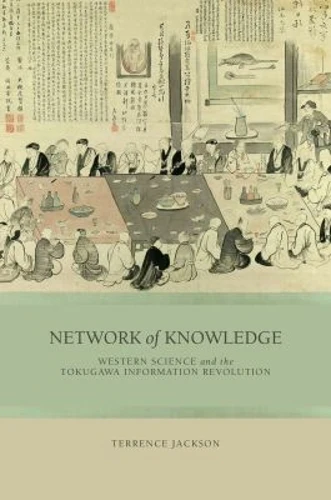
Network of Knowledge
Nagasaki during the Tokugawa (1603–1868) was truly Japan's window on the world with its Chinese residences and Deshima island, where Western foreigners, including representatives of the Dutch East India Company, were confined. In 1785 ?tsuki Gentaku (1757–1827) journeyed from the capital to Nagasaki to meet Dutch physicians and the Japanese who acted as their interpreters. Gentaku was himself a physician, but he was also a Dutch studies (rangaku) scholar who passionately believed that European science and medicine were critical to Japan's progress. Network of Knowledge examines the development of Dutch studies during the crucial years 1770–1830 as Gentaku, with the help of likeminded colleagues, worked to facilitate its growth, creating a school, participating in and hosting scholarly and social gatherings, and circulating books. In time the modest, informal gatherings of Dutch studies devotees (rangakusha), mostly in Edo and Nagasaki, would grow into a pan-national society.
Applying ideas from social network theory and Bourdieu's conceptions of habitus, field, and capital, this volume shows how Dutch studies scholars used networks to grow their numbers and overcome government indifference to create a dynamic community. The social significance of rangakusha, as much as the knowledge they pursued in medicine, astronomy, cartography, and military science, was integral to the creation of a Tokugawa information revolution—one that saw an increase in information gathering among all classes and innovative methods for collecting and storing that information. Although their salons were not as politically charged as those of their European counterparts, rangakusha were subversive in their decision to include scholars from a wide range of socio-economic backgrounds. They created a cultural society of civility and play in which members worked toward a common cultural goal. This insightful study reveals the strength of the community's ties as it follows rangakusha into the Meiji era (1868–1912), when a new generation championed values and ambitions similar to those of Gentaku and his peers.
Network of Knowledge offers a fresh look at the cultural and intellectual environment of the late Tokugawa that will be welcomed by scholars and students of Japanese intellectual and social history.
Applying ideas from social network theory and Bourdieu's conceptions of habitus, field, and capital, this volume shows how Dutch studies scholars used networks to grow their numbers and overcome government indifference to create a dynamic community. The social significance of rangakusha, as much as the knowledge they pursued in medicine, astronomy, cartography, and military science, was integral to the creation of a Tokugawa information revolution—one that saw an increase in information gathering among all classes and innovative methods for collecting and storing that information. Although their salons were not as politically charged as those of their European counterparts, rangakusha were subversive in their decision to include scholars from a wide range of socio-economic backgrounds. They created a cultural society of civility and play in which members worked toward a common cultural goal. This insightful study reveals the strength of the community's ties as it follows rangakusha into the Meiji era (1868–1912), when a new generation championed values and ambitions similar to those of Gentaku and his peers.
Network of Knowledge offers a fresh look at the cultural and intellectual environment of the late Tokugawa that will be welcomed by scholars and students of Japanese intellectual and social history.
$19.25
Original: $54.99
-65%Network of Knowledge—
$54.99
$19.25Network of Knowledge
Nagasaki during the Tokugawa (1603–1868) was truly Japan's window on the world with its Chinese residences and Deshima island, where Western foreigners, including representatives of the Dutch East India Company, were confined. In 1785 ?tsuki Gentaku (1757–1827) journeyed from the capital to Nagasaki to meet Dutch physicians and the Japanese who acted as their interpreters. Gentaku was himself a physician, but he was also a Dutch studies (rangaku) scholar who passionately believed that European science and medicine were critical to Japan's progress. Network of Knowledge examines the development of Dutch studies during the crucial years 1770–1830 as Gentaku, with the help of likeminded colleagues, worked to facilitate its growth, creating a school, participating in and hosting scholarly and social gatherings, and circulating books. In time the modest, informal gatherings of Dutch studies devotees (rangakusha), mostly in Edo and Nagasaki, would grow into a pan-national society.
Applying ideas from social network theory and Bourdieu's conceptions of habitus, field, and capital, this volume shows how Dutch studies scholars used networks to grow their numbers and overcome government indifference to create a dynamic community. The social significance of rangakusha, as much as the knowledge they pursued in medicine, astronomy, cartography, and military science, was integral to the creation of a Tokugawa information revolution—one that saw an increase in information gathering among all classes and innovative methods for collecting and storing that information. Although their salons were not as politically charged as those of their European counterparts, rangakusha were subversive in their decision to include scholars from a wide range of socio-economic backgrounds. They created a cultural society of civility and play in which members worked toward a common cultural goal. This insightful study reveals the strength of the community's ties as it follows rangakusha into the Meiji era (1868–1912), when a new generation championed values and ambitions similar to those of Gentaku and his peers.
Network of Knowledge offers a fresh look at the cultural and intellectual environment of the late Tokugawa that will be welcomed by scholars and students of Japanese intellectual and social history.
Applying ideas from social network theory and Bourdieu's conceptions of habitus, field, and capital, this volume shows how Dutch studies scholars used networks to grow their numbers and overcome government indifference to create a dynamic community. The social significance of rangakusha, as much as the knowledge they pursued in medicine, astronomy, cartography, and military science, was integral to the creation of a Tokugawa information revolution—one that saw an increase in information gathering among all classes and innovative methods for collecting and storing that information. Although their salons were not as politically charged as those of their European counterparts, rangakusha were subversive in their decision to include scholars from a wide range of socio-economic backgrounds. They created a cultural society of civility and play in which members worked toward a common cultural goal. This insightful study reveals the strength of the community's ties as it follows rangakusha into the Meiji era (1868–1912), when a new generation championed values and ambitions similar to those of Gentaku and his peers.
Network of Knowledge offers a fresh look at the cultural and intellectual environment of the late Tokugawa that will be welcomed by scholars and students of Japanese intellectual and social history.
Product Information
Product Information
Shipping & Returns
Shipping & Returns
Description
Nagasaki during the Tokugawa (1603–1868) was truly Japan's window on the world with its Chinese residences and Deshima island, where Western foreigners, including representatives of the Dutch East India Company, were confined. In 1785 ?tsuki Gentaku (1757–1827) journeyed from the capital to Nagasaki to meet Dutch physicians and the Japanese who acted as their interpreters. Gentaku was himself a physician, but he was also a Dutch studies (rangaku) scholar who passionately believed that European science and medicine were critical to Japan's progress. Network of Knowledge examines the development of Dutch studies during the crucial years 1770–1830 as Gentaku, with the help of likeminded colleagues, worked to facilitate its growth, creating a school, participating in and hosting scholarly and social gatherings, and circulating books. In time the modest, informal gatherings of Dutch studies devotees (rangakusha), mostly in Edo and Nagasaki, would grow into a pan-national society.
Applying ideas from social network theory and Bourdieu's conceptions of habitus, field, and capital, this volume shows how Dutch studies scholars used networks to grow their numbers and overcome government indifference to create a dynamic community. The social significance of rangakusha, as much as the knowledge they pursued in medicine, astronomy, cartography, and military science, was integral to the creation of a Tokugawa information revolution—one that saw an increase in information gathering among all classes and innovative methods for collecting and storing that information. Although their salons were not as politically charged as those of their European counterparts, rangakusha were subversive in their decision to include scholars from a wide range of socio-economic backgrounds. They created a cultural society of civility and play in which members worked toward a common cultural goal. This insightful study reveals the strength of the community's ties as it follows rangakusha into the Meiji era (1868–1912), when a new generation championed values and ambitions similar to those of Gentaku and his peers.
Network of Knowledge offers a fresh look at the cultural and intellectual environment of the late Tokugawa that will be welcomed by scholars and students of Japanese intellectual and social history.
Applying ideas from social network theory and Bourdieu's conceptions of habitus, field, and capital, this volume shows how Dutch studies scholars used networks to grow their numbers and overcome government indifference to create a dynamic community. The social significance of rangakusha, as much as the knowledge they pursued in medicine, astronomy, cartography, and military science, was integral to the creation of a Tokugawa information revolution—one that saw an increase in information gathering among all classes and innovative methods for collecting and storing that information. Although their salons were not as politically charged as those of their European counterparts, rangakusha were subversive in their decision to include scholars from a wide range of socio-economic backgrounds. They created a cultural society of civility and play in which members worked toward a common cultural goal. This insightful study reveals the strength of the community's ties as it follows rangakusha into the Meiji era (1868–1912), when a new generation championed values and ambitions similar to those of Gentaku and his peers.
Network of Knowledge offers a fresh look at the cultural and intellectual environment of the late Tokugawa that will be welcomed by scholars and students of Japanese intellectual and social history.